


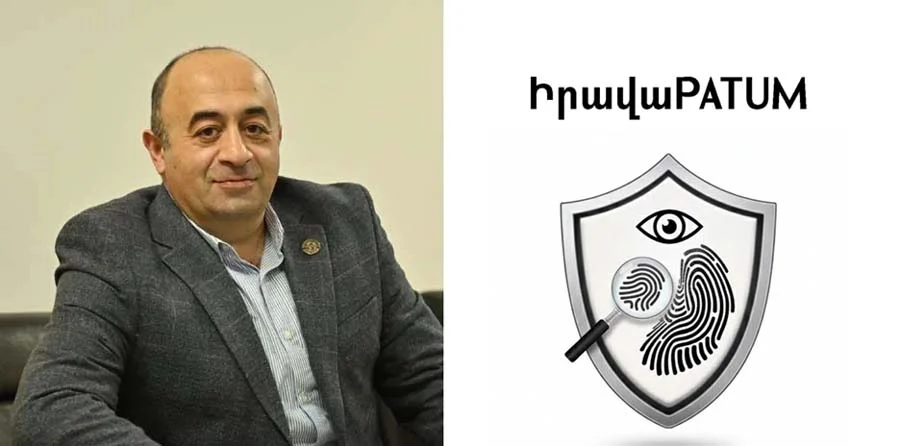
We look not for people, but for what they have hidden. The stories presented in the series “The Detective Investigates” are based on real cases investigated by Hayk Gabrielyan, Chairman of the Association of Private Detectives of Armenia, and Gabrielyan & Partners Detective Bureau, Armenia’s only officially registered private detective organisation. Every Friday, Aravot publishes the detective’s extraordinary findings.
It was the first working day after the New Year holidays, and we were at our computers in the office replying to greetings. Two women walked in without knocking. Nune and Mariam had been friends for twenty years. Every day together — in the same office, at the same desk. But now they sat in front of me as two broken women united by a shared grief: each had been deceived by the man she loved.
“Mr. Gabrielyan… our lives are ruined,” Nune whispered. “We both fell in love, we both believed, and we were both robbed.”
I switched on the recorder.
Nune’s story. Arthur came into her life — a colonel in the Russian security services. Quiet, stern, a man of few words. He avoided being photographed, citing the secrecy of his work. They always met at Nune’s home and never once went to a restaurant or café together. He often vanished at night — “an alert at the base in Gyumri”. Eventually Arthur urgently asked for cash to “celebrate his promotion to general”, and Nune mortgaged her flat. Arthur promised they would celebrate his general’s rank on their wedding day. He also asked her not to tell anyone about him until the wedding.
Mariam’s story. Her chosen one was David — an influential figure in the criminal underworld. Living a dangerous life, but “fair-minded”. They met only at night, and only at Mariam’s home. David had no photos either. He asked Mariam to keep their relationship secret because he had many enemies and didn’t want her to get hurt. One day he announced that he urgently needed money “for the brothers in prison”. Mariam took out consumer loans. David promised that on the day he repaid the debt he would give her a fine diamond ring as thanks from the brotherhood.
We had only one lead: Nune had last seen “Arthur” outside the shop downstairs from her building. That night we were in the shop. Going through the camera footage, we finally found him. He was clearly a professional: having spotted the cameras, he kept his head down and never looked towards them. But at one moment, saying goodbye to Nune, he glanced up, and half his face appeared in the frame — with a white scar above his left eyebrow. After cleaning up the frame as much as possible with special software and running it through one of the best facial recognition systems, we found his VKontakte profile from seventeen years earlier, probably long forgotten. His name: Artak. Not a colonel. Not a mobster. An ordinary man.
A man with no registered job or business and, most importantly, not registered at any address in Armenia, with no permanent place of residence. He was a Russian citizen. In Russia he faced quite a few court cases over debts and enforcement proceedings, as well as one criminal case for robbing the home of a woman he had lived with. He had served three years in a Russian prison.
With his details in hand, we began unravelling his digital footprint. Like all fraudsters, he was too clever to make ordinary phone calls and get caught easily. He used Telegram. We managed to capture his online activity and the geolocation of his IP addresses. The picture was appalling in its cynicism. On a Friday evening, around 22:00, “Arthur’s” Telegram profile was active within the IP range of Nune’s building. At 01:30, the same smartphone logged into “David’s” profile — but this time from the network in Mariam’s neighbourhood. We also discovered that the “Arthur” Telegram profile used by Artak was linked to an active account at a well-known online casino, with the details of a Cypriot bank listed as his bank.
It was already clear to us that he was a fraudster and a gambler. But all of this had to be proven and substantiated. Our Cypriot colleagues came to the rescue: in response to their request, the bank provided information on the two most recent transfers. 14 November, 10:00 — USD 15,000 received (the day after Nune took out her loan). 16 November, 17:30 — another USD 11,000 received (the day Mariam took out hers). There was no Arthur and no David. There was one actor, a fraudster and gambler, who used the lie he told one friend as an alibi for visiting the other. The most important fact: the Telegram account in David’s name had been opened with a Russian mobile number registered to Artak.
Having gathered the evidence, we invited them to the office, and I placed Artak’s photo on the desk.
“Do you recognise him?”
Nune’s eyes filled with tears.
“That’s Arthur. That’s his scar…”
Mariam leaned forward, the colour draining from her face.
“What Arthur… Nune, that’s my David.”
For about five minutes there was a deafening silence in the office. Friends for twenty years, working in the same room — and both manipulated by the same man.
Their case contained all four key ingredients used by classic fraudsters.
1. An unverifiable cover story. If a man’s life resembles a spy or crime film — dangers, secrets, incredible stories — that is not romance. It is a pre-built alibi to justify future inconsistencies, disappearances and lies.
2. The digital ghost. A man who refuses to leave a trace in the life of the woman he loves (photos together, open social media, appearances in public places) is simply keeping himself a digital ghost, so that he can vanish without a trace when the time comes.
3. Information isolation. The deceiver deliberately cuts the woman off from outside contact, forbidding her to tell friends or family about the relationship. This is a control mechanism. Any cross-checking of information (for example, a simple conversation between Nune and Mariam) would instantly have destroyed his fake script.
4. The “urgent rescue in the name of love” operation. A demand or request for immediate financial help (stories like “I need money urgently or they’ll arrest or kill me”) is no accident. It is the final stage of the script — getting money quickly through psychological pressure. You are given no time to think, only to react.
If Nune and Mariam had shared their “romantic successes” with each other, Artak would never have been able to deceive them.
By the time we had worked everything out, Artak had already left Armenia. But fraudsters don’t know how to stop. They need money, they need the thrill of the game and new victims. With our help, the women followed the proper procedure and filed a complaint with Russian law enforcement to open a criminal fraud case against Artak. Nune and Mariam were burning for revenge. They didn’t care about the money — they wanted to punish the scoundrel who had broken their hearts. We contacted our colleagues in Moscow and asked for their support to make the process more effective.
Twenty days passed, and we were busy with our daily work. Then I got a call from my Moscow colleague Ivan. He had good news: during an operation at an underground casino on the outskirts of Moscow, Artak had been arrested too. Ivan emailed me several photos. I invited Nune and Mariam to the office and laid out in front of them the pictures taken during the raid on the underground casino. The man who had presented himself as powerful and invincible was now lying handcuffed on a dirty floor, staring at the camera in terror. Beside him on the table lay the last roulette chips, bought with the money he had extorted from these two women.
There were no cries of victory in the office. The money was gone for good. Two women’s hearts had been deceived and broken. They wept quietly, mourning men who had never really existed. Nune slowly reached out and took her friend’s hand. Mariam hugged her tightly.
Fraudsters never break down doors. They see the empty corner of your soul and fill it with an illusion. And they stay there until you switch on the light yourself and open your eyes. But by the time you do, it is usually too late.
Hayk GABRIELYAN
Aravot daily
10.04.2026
Read at the source (in Armenian): My beloved is no threat to yours