


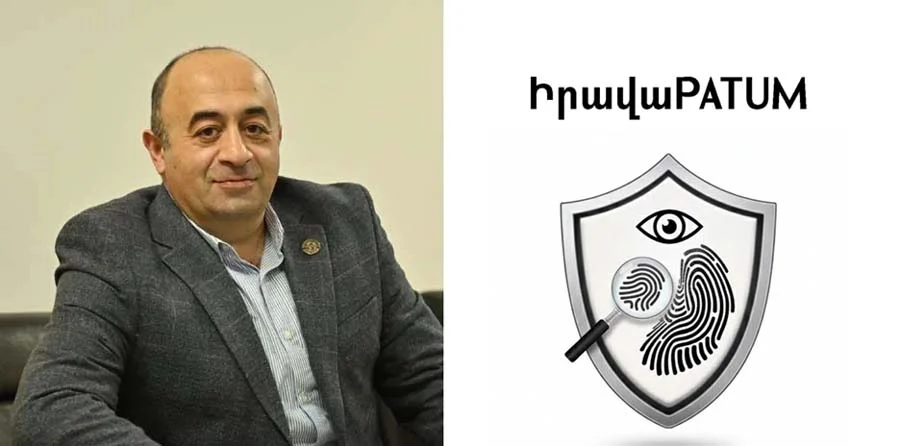
We look not for people, but for what they have hidden. The stories presented in the series “The Detective Investigates” are based on real cases investigated by Hayk Gabrielyan, Chairman of the Association of Private Detectives of Armenia, and Gabrielyan & Partners Detective Bureau, Armenia’s only officially registered private detective organisation. Every Friday, Aravot publishes the detective’s extraordinary findings.
We had travelled to Chicago, USA, for the summit marking the 100th anniversary of the World Association of Detectives. The DRAKE hotel, with more than a century of history, had gathered the world’s best private investigators under its hospitable roof — from nearly a hundred countries.
The Drake is not just a hotel. Soon after it opened it became a favourite of high society for its luxury and impeccable service. They say the number of celebrities who have stayed there over the century is too great to count: Winston Churchill, US Presidents Herbert Hoover, Dwight Eisenhower, Gerald Ford and Ronald Reagan, Queen Elizabeth II, Prince Charles and Princess Diana, and many other famous people. By an interesting twist of fate, we were staying in the very room where the world-famous gangster Al Capone spent several nights in the 1920s. At night, when silence reigned in the Drake, the walls seemed to speak of the 1920s and ’30s.
The event was held in the Drake’s ballroom. My welcome address and presentation were scheduled for the second day of the summit. I had put my phone on silent and was waiting for my turn. At one point I turned it over just to check my notifications. I saw more than twenty missed calls from the same Russian number. At that hour it is the middle of the night in Russia and people are asleep. The persistence of the calls told me the matter was urgent and the caller was distressed. I slipped out of the hall as discreetly as I could and called back. I asked a question in Russian and got an answer in Armenian. It was a compatriot of ours. In an anxious, trembling voice he first apologised, then said he had learned online that I was in the US and so had felt confident calling. I asked him to write down the problem briefly so I could get back to him after my talk.
My presentation was very well received. During the break I settled into the hotel lobby bar and read what Manvel had written: “Mr. Gabrielyan, please help me. I am being intimidated with claims that I am the father of a child.” The next message revealed the whole picture. A former lover, Russian by nationality, with whom he had had a long relationship, had given birth and insisted the child was Manvel’s. She called constantly, threatening to go to court, cause a scandal and disgrace his family. In return she demanded that he, as the child’s father, pay for the child’s upkeep. Manvel was certain the child was not his. He asked us to find out the truth: if it were confirmed that he was the father, he would do everything for the child.
I quickly drew up a plan of priority actions. Who is this woman really? What is her past? Who has she been in contact with over the last two years? Has she been involved in similar stories before? Are there financial problems, debts, connections? These were the questions that needed answers first. I wrote to my Russian colleagues and went back into the hall.
By the end of the day we had an answer from Russia. The woman’s record was far from clean: she had been involved in a similar story before — in another city, with another man. But there was a more serious fact. Among her contacts was one particular man whose relationship with her coincided exactly, in time, with the period of the pregnancy.
After that day’s summit session, Vrezh, a few colleagues and I gathered in a hotel room over Armenian cognac and dried fruit brought from Yerevan and began discussing the case. A colleague who heads a well-known detective firm specialising in genetic investigations listened to the whole story and suggested a DNA test to establish the genetic relationship between the child and the father. Manvel liked the idea and agreed immediately. What remained was to organise the collection of samples needed to obtain the child’s DNA. Deception was out of the question. The only right way was to use detective ingenuity to create a lawful opportunity.
We drew up a detailed work plan. Our Russian colleagues began observing the woman’s daily routine. Very soon one important thing became clear: she was not looking after the child alone. A nanny came every day and stayed until evening. That was an opportunity. The next step was planned down to the minute. We quickly identified the nanny. An ordinary woman with an ordinary routine. People like that are the best channel for an information approach. My Russian colleagues put me in touch with her. My client became my “brother”. The cover story was ready. I explained the situation to her: there is a legal dispute, there is a question of paternity, and the truth needs to be established. If my “brother” really is the child’s father, we are ready to take on the child’s care and ensure a comfortable life. She was afraid, but she understood how serious the situation was.
I suggested that, instead of throwing away hygiene items carrying biological traces from caring for the child, she carefully set them aside in sealed bags we provided. The mother herself cleaned the child’s ears, nose and mouth with cotton buds and left them on napkins for the nanny to throw away. The nanny was to follow precisely the steps I had laid out. The cotton buds and napkins did not go into the bin — they went into special sealed bags, labelled with the exact date and time.
It was the closing evening of the summit. At the gala dinner the hall rang with applause. Everyone was congratulating one another on the association’s centenary. Glasses of wine, toasts, smiles. Detached from it all, I was waiting for news. Manvel wrote that he had paid the nanny the promised fee, collected the samples and, together with his own, sent them by international post to the organisation we had recommended — an independent laboratory in a third country. I didn’t say a word. I simply picked up my glass of wine and emptied it in one go.
We waited impatiently for the results, which were due in 10 days. From Chicago we went on to Los Angeles. The Armenian community there and long-awaited reunions with old friends helped us unwind. I like long flights: there is internet access, which helps break the monotony. The results arrived on the plane from Los Angeles to Yerevan. Probability of paternity: 0.00%. I forwarded them to Manvel straight away. For about thirty minutes he had seen my message but didn’t reply. Then he wrote: “I was sure… I just needed it to be 100%. We are Armenians, and we are responsible for our children until the day we die.”
I breathed a sigh of relief and… woke up to the pilot’s voice: the plane was landing at Frankfurt Airport. I had slept for about eight hours, but the truth never sleeps. It simply waits for its moment — awake, watching, remembering, gathering the little things that are rubbish to others but, to a detective, evidence that becomes fact. That trip to Chicago was memorable not only for this successful investigation. At the same summit I was elected the Association’s Ambassador for the region.
Hayk GABRIELYAN
Aravot daily
27.03.2026
Read at the source (in Armenian): “When the truth never sleeps”